Timber, for a farmhouse that was built before the blind industry existed
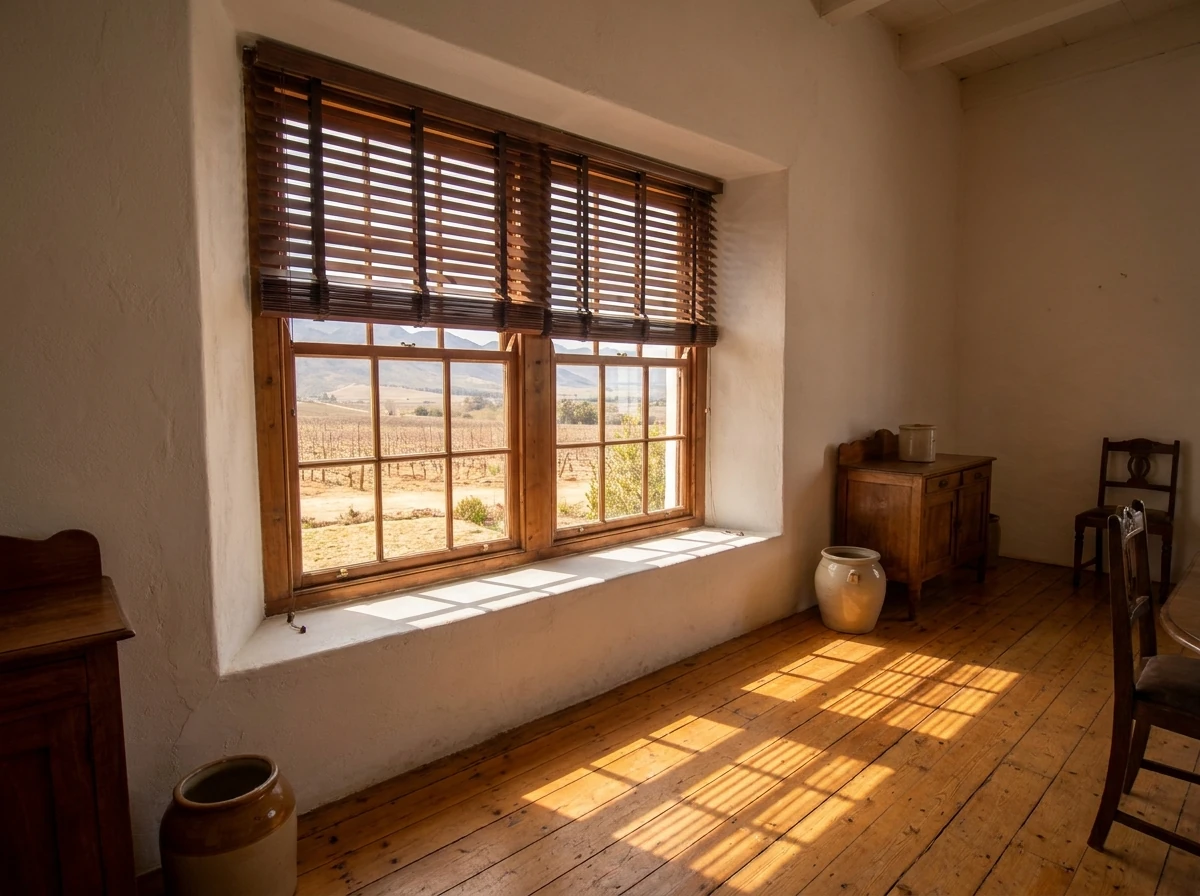
Wellington's older housing stock runs deep — Cape Dutch and Victorian homesteads, twenty of them declared National Monuments, with sash and gable-window reveals that were plastered in by hand long before anyone was measuring for a standard track. Wide 50mm timber slats suit that stock in a way a boxy roller cassette doesn't: they read as part of the room rather than an addition to it, and they tilt to let winter sun in low across a yellowwood floor while still cutting the direct glare of a summer afternoon.
Aluminium, for the kitchen and the cellar office
Steam, damp and the general wear of a working farmhouse kitchen or a wine-cellar office are where fabric blinds give up first. Slim 25mm aluminium venetians handle both — powder-coated, wipeable, and just as capable of tilting light up for glare-free work or down for privacy from a neighbouring werf building.
The adjustability argument, worth making plainly
A roller is open or shut by degree; a venetian steers light direction — tilt up for glare-free daylight over a desk, tilt down for privacy from a two-storey neighbour or an overlooking cellar loft, close flat for full dark. On a Wellington farmhouse where the mountain shadow already compresses the useful daylight hours, that hour-by-hour control matters more than it would on an open street with a longer, gentler light curve.
A deep Cape Dutch reveal rewards a wide slat — anything narrower just multiplies the number of lines you're looking through to see the vines.
On-site measure, Wellington- Timber slats, 50mm, for heritage sash and gable reveals
- Aluminium slats, 25mm, for kitchens, cellars and wet rooms
- Tilt-for-direction control, not just open or closed
- Wide windows split or ladder-tape supported on request
- Motorised tilt available on premium lines
Got a farmhouse window that's never quite fitted a stock blind?
Free in-home measure, written per-window quote, no obligation.